Social proof in ads: the kinds that actually move CPA
Not all proof is equal. Some kinds lower your cost per purchase, and some just fill space on the ad.
On this page
- Why most social proof doesn’t move the number
- 1. A specific customer review
- 2. Proof people can see
- 3. Volume: review counts and customer numbers
- 4. Experts
- 5. Stockists and retail
- 6. Creators and partnership ads
- 7. Comments and replies
- 8. Press and awards
- 9. What to stop doing
- What long-running ads use right now
- How to test proof properly
Almost every ecom ad has social proof in it now: five stars in a corner, “10,000+ happy customers” under the headline. Because everyone has it, the generic version has stopped doing much. Proof works when it removes a specific doubt for a specific person, and some kinds do that far better than others.
Here’s what we’ve seen move cost per purchase on Meta, roughly from most to least reliable, how to use each kind, and how to test it without fooling yourself.
The short version
- Specific beats big. One detailed review usually does more than a large review count.
- Proof people can see, like a reaction or a before and after, beats proof they have to take on trust.
- Borrowed trust from experts and stockists works when the buyer already trusts the source.
- Test proof like any other variable: one ad, one change, judged on orders rather than clicks.
Why most social proof doesn’t move the number
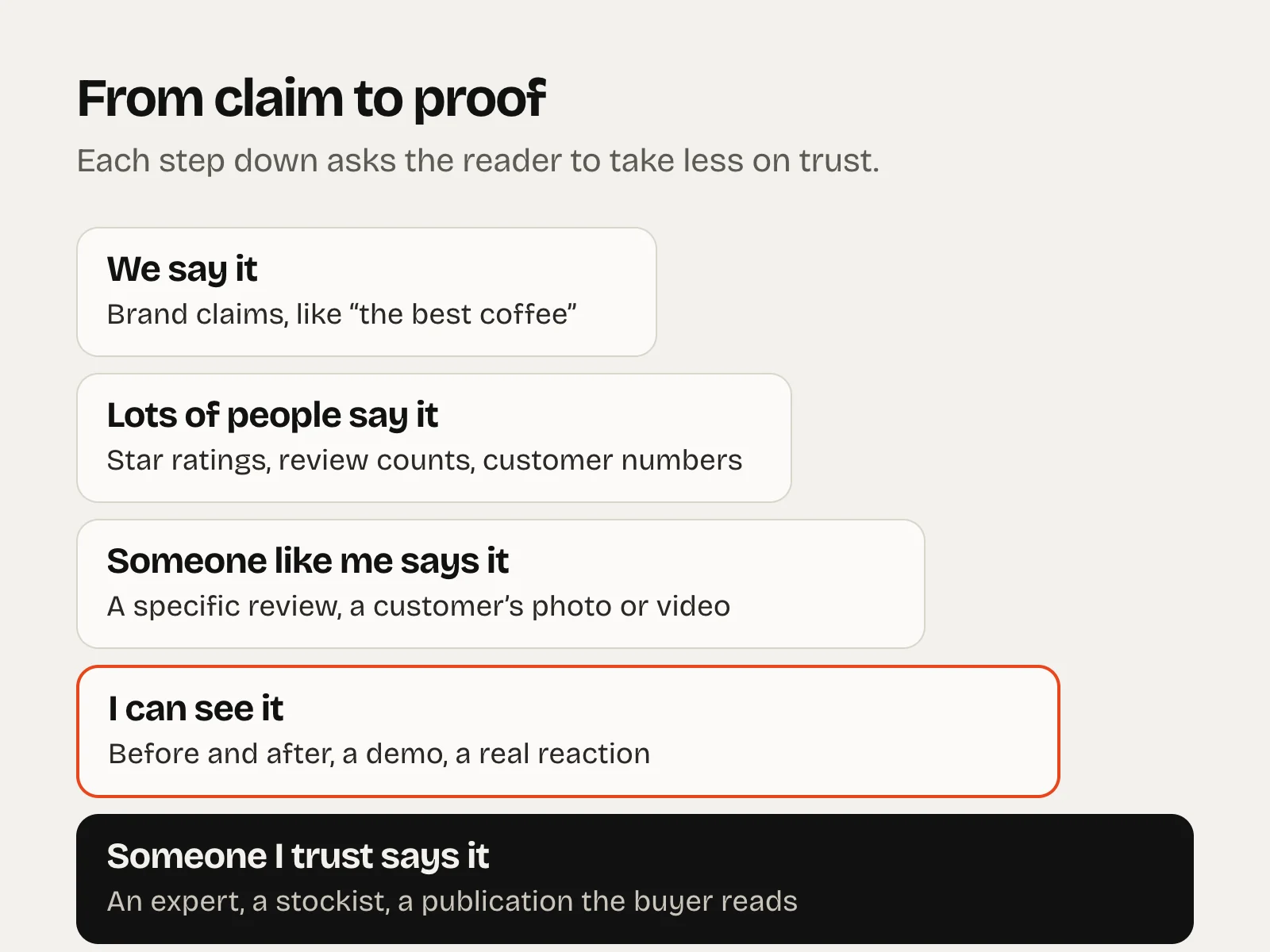
Social proof is a shortcut. The reader can’t try your product from the feed, so they borrow other people’s experience instead. The question is how much they have to take on trust.
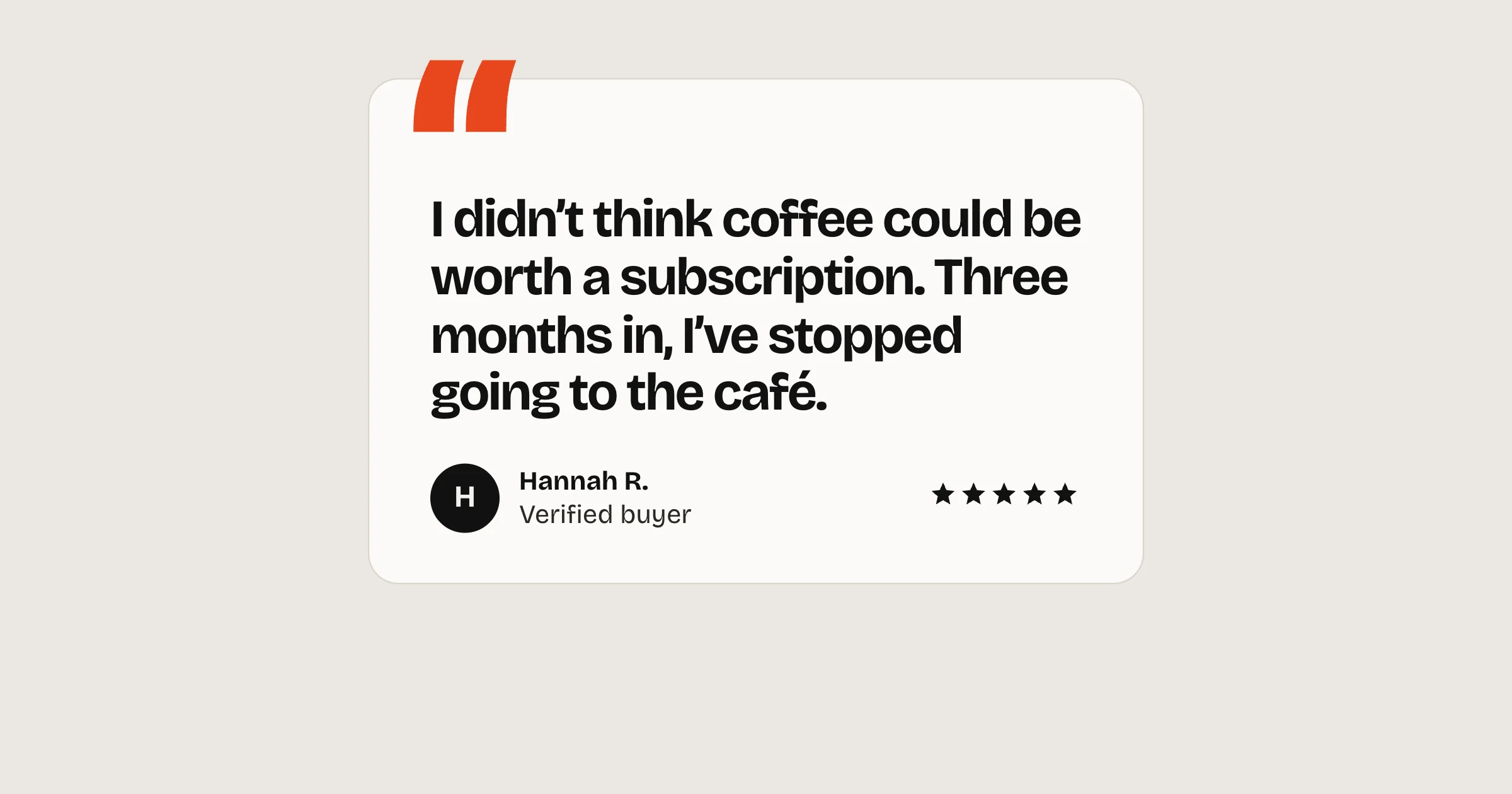
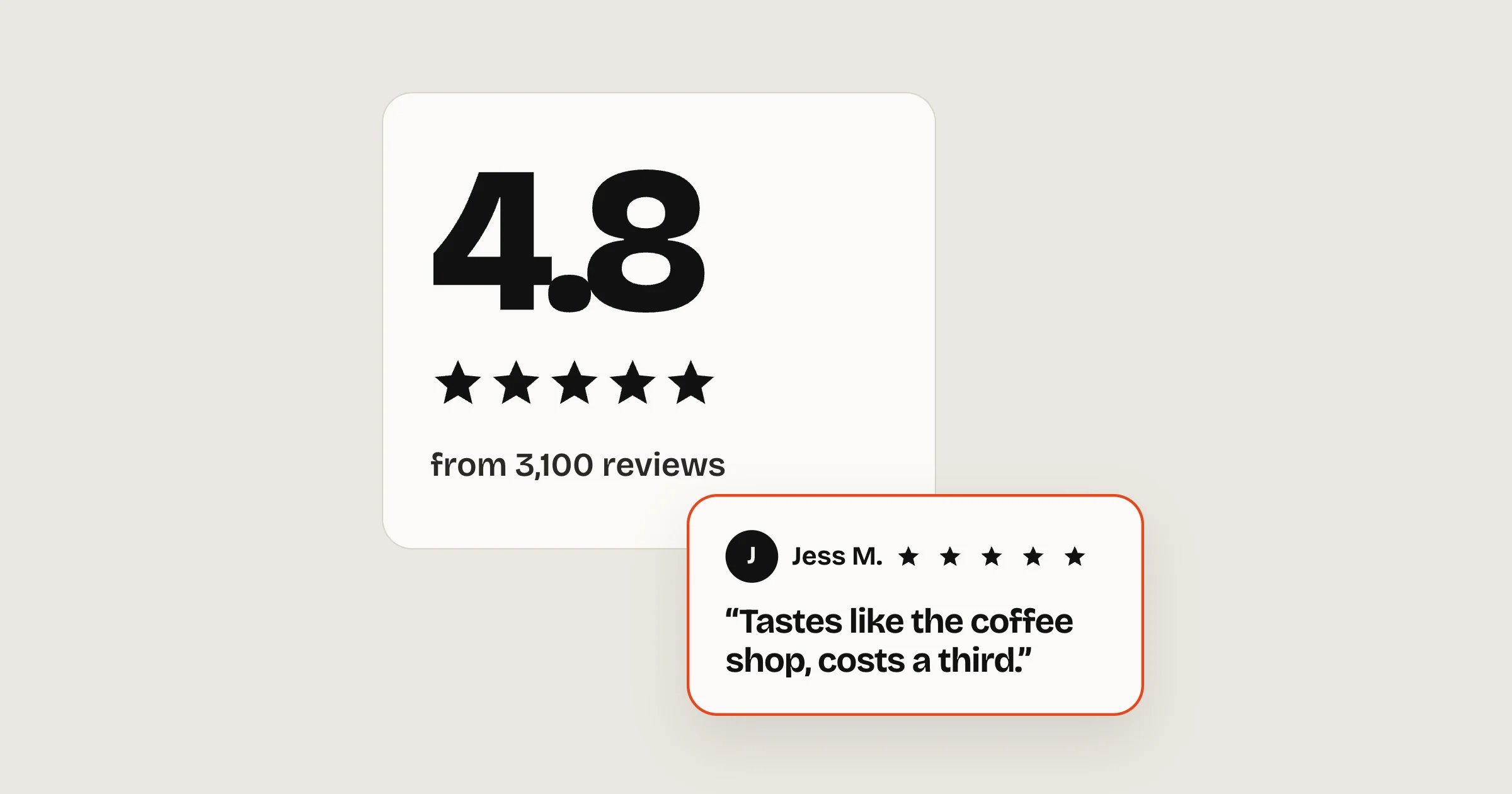
“The best coffee you’ll ever taste” asks them to trust you. “4.8 from 3,100 reviews” asks them to trust a number. “I haven’t been back to the café in three months” asks them to trust someone like them. A video of someone opening the bag and smelling it asks them to trust their own eyes. Each step down the list removes a little more doubt.
1. A specific customer review
A review with a detail in it is the most reliable proof we use. It works because it answers a doubt in a buyer’s own words, which no headline written by the brand can do.
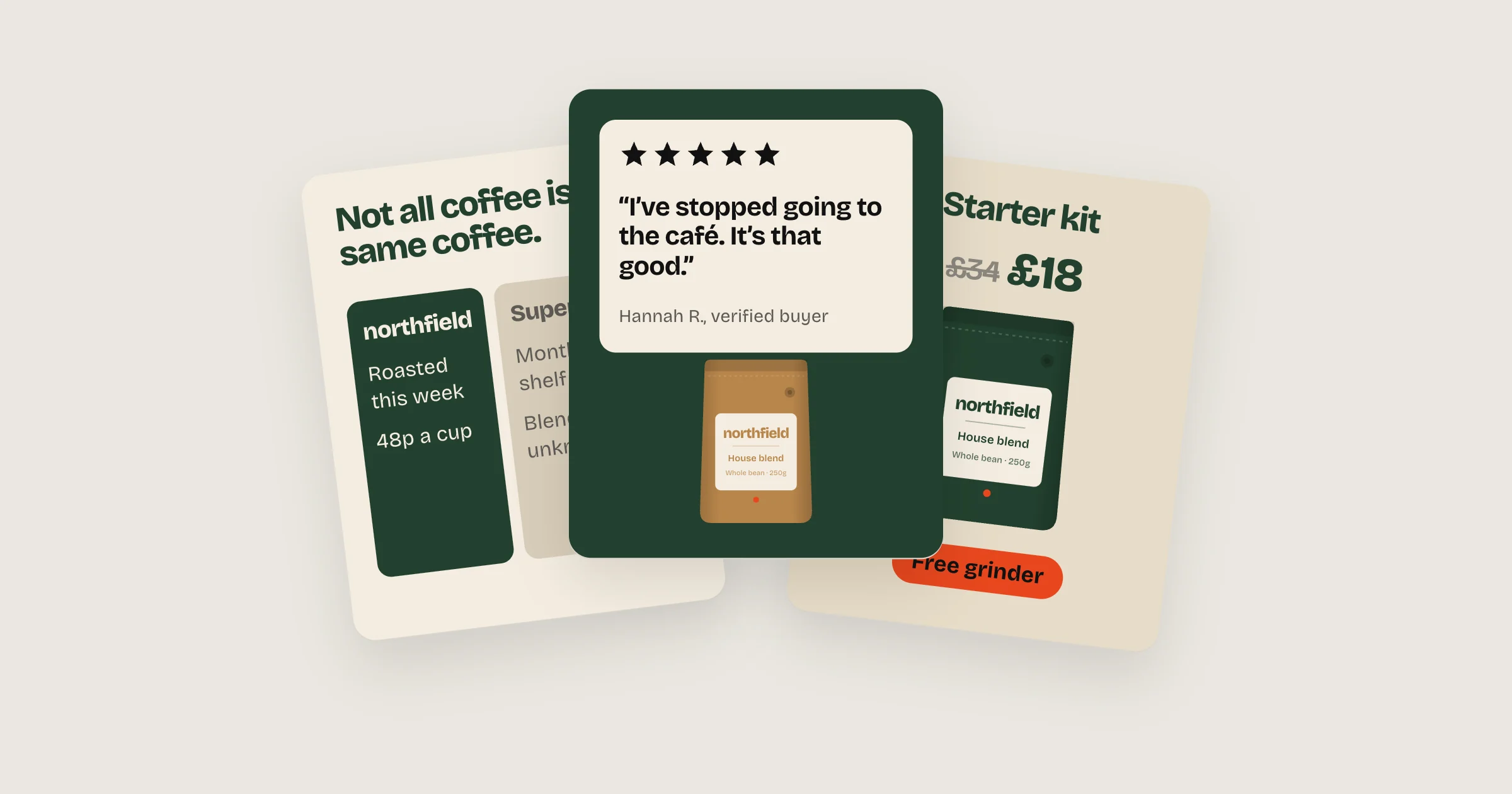
Pick reviews that contain a number, a timeframe, a before or a sensory detail. “Tastes like the café, costs a third” beats “Amazing!!” every time. Our guide to testimonial ads covers how to find and choose them.
2. Proof people can see
A real reaction, a before and after, a demo of the product doing its job. This kind of proof doesn’t ask for belief at all, which is why it tends to convert.
We see it in our own accounts. In a pet supplements account, ads that compared a dog then and now consistently beat the account average, and a testimonial showing the dog’s reaction turned noticeably more of its clicks into orders. In a UK supplements account, a customer-style static built around a before and after ran about twice as efficiently as a generic creator photo.
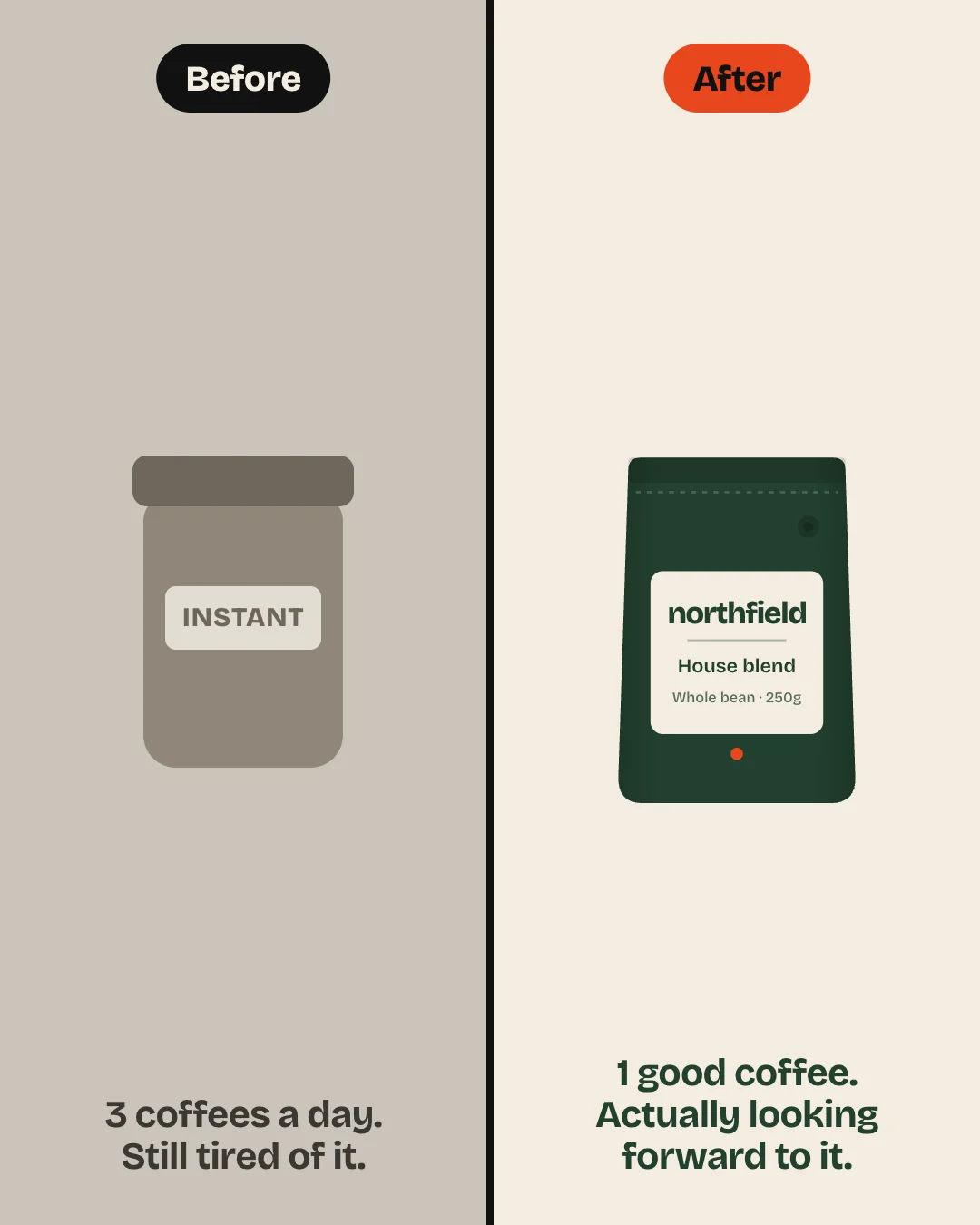
One caution: Meta restricts before and after images for anything health, body or weight related. Show the situation changing, not a body.
3. Volume: review counts and customer numbers
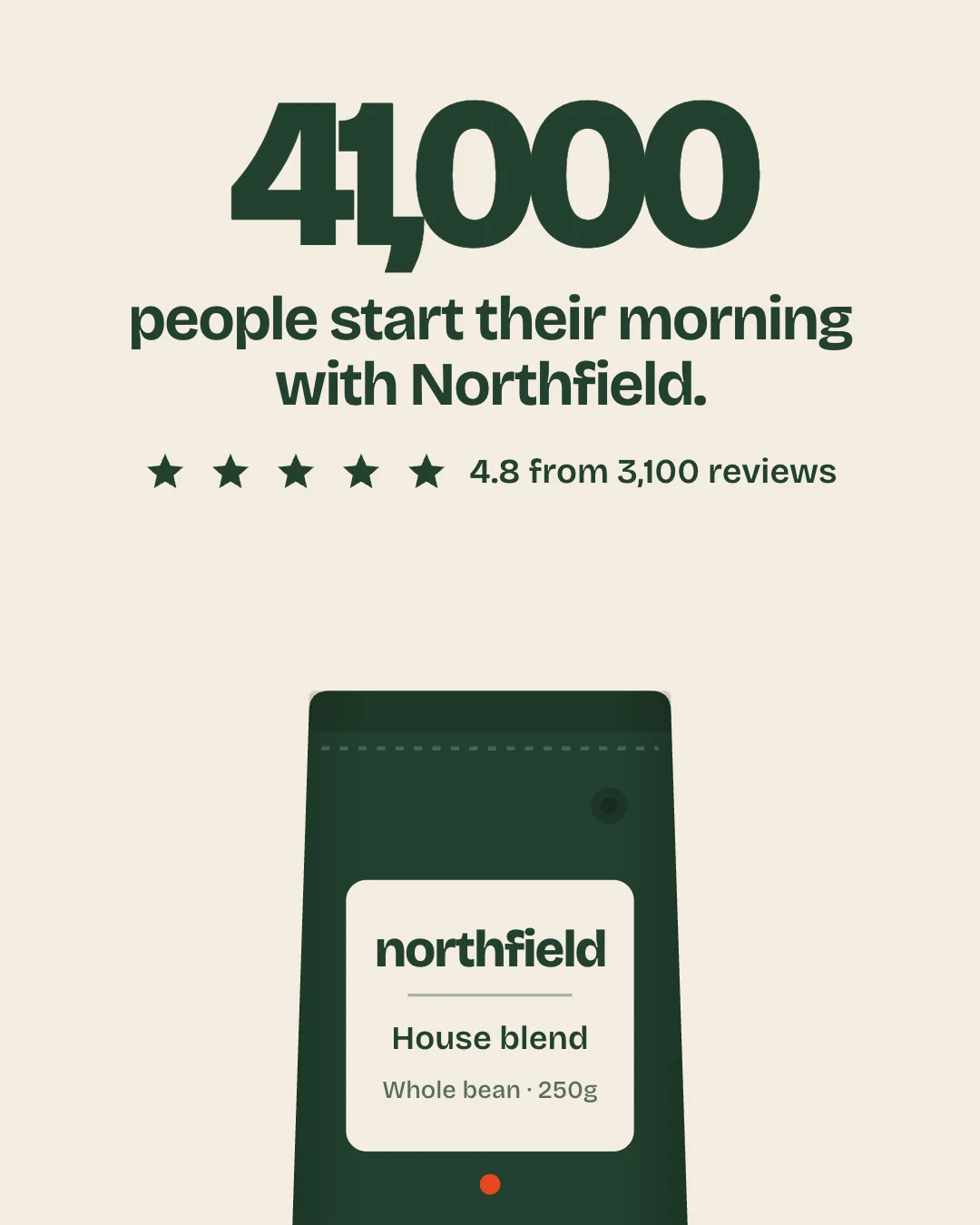
Big numbers reassure people that they aren’t the first to try something. They work best when the number is large for your category, precise (41,000, not “thousands”), true, and recent.
Most of the time, volume belongs in a supporting role: a line under the headline, or a corner of the image. It can carry a whole ad for retargeting or for well-known products, where the doubt is “is this legit?” rather than “will this work for me?”.
4. Experts
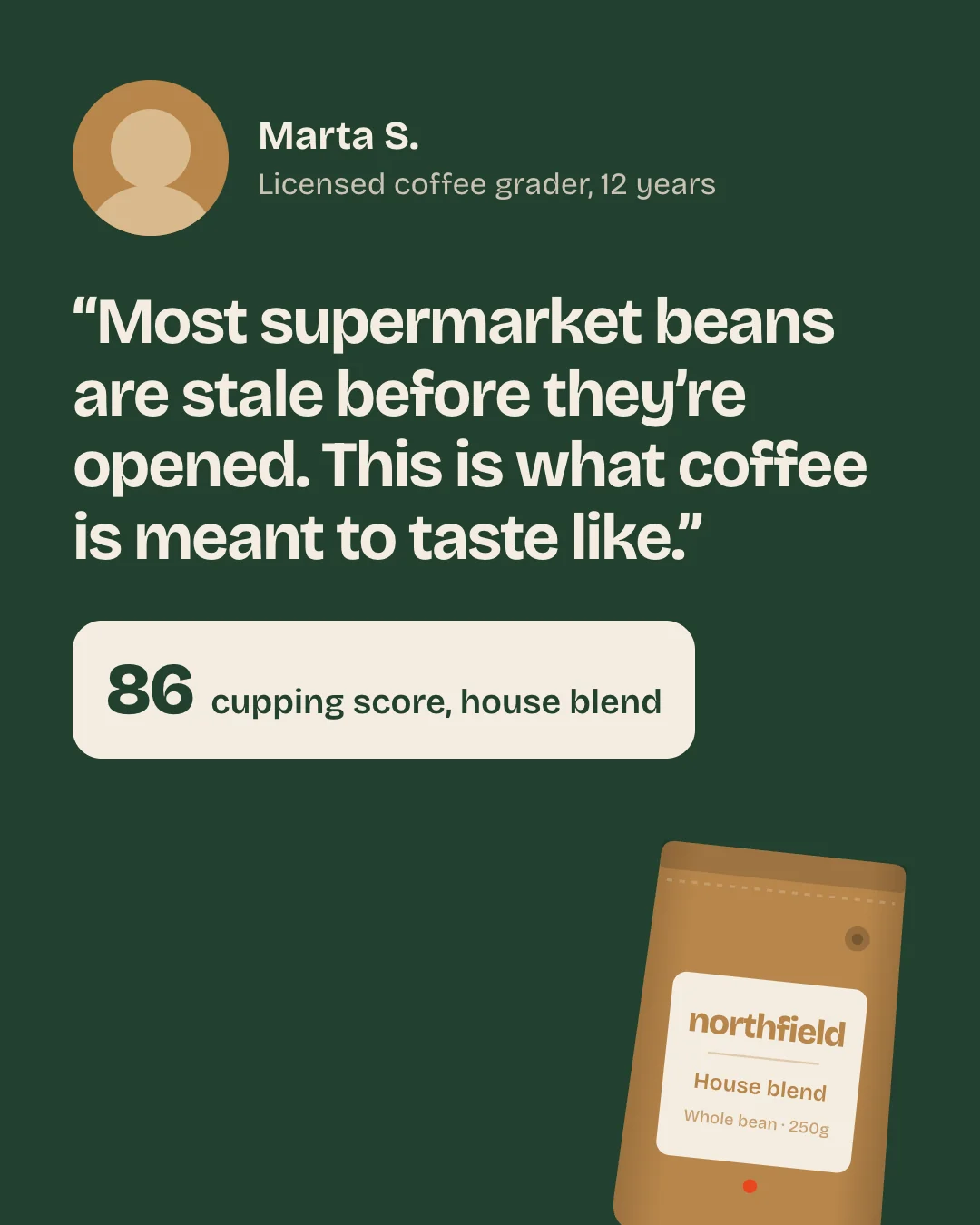
In categories where buyers expect expertise, such as supplements, skincare and pet health, an expert explaining why something works can beat any customer quote. It answers the doubt “but does it actually do anything?” in a way customers can’t.
In a UK supplements account we run, the best new videos in one month were science-led, with an expert talking through why the key ingredient works, and people watched them for 8 to 15 seconds on average. The credentials have to be real and relevant, and health claims still have to follow the rules for your category.
5. Stockists and retail
“Now in” a well-known shop is borrowed trust. If a retailer the buyer knows has chosen to stock you, you must be legitimate.
It can be very strong. In one UK supplements account, ads that mentioned a well-known high-street stockist were the most efficient in the account. But over half of their reported purchases came from views rather than clicks, so check retail-led ads on a click-only basis before you scale them. In the same account, the best retail ad led with a first-order discount, not the buy-one-get-one offer most of the others used.
6. Creators and partnership ads
Partnership ads run from a creator’s handle as well as yours, so the proof is the person, not the brand. They’re useful for reaching people who trust that creator and for making ads feel less like ads.
Judge them on more than cost per purchase. In one account, ads run from creators’ handles brought in customers at the same cost as the brand’s own page, but with noticeably smaller orders, so the return was lower. Check order value by ad before you decide a creator is working.
7. Comments and replies
Real comments under an ad are proof the reader finds for themselves, which makes them more believable than anything in the ad. Two ways to use them:
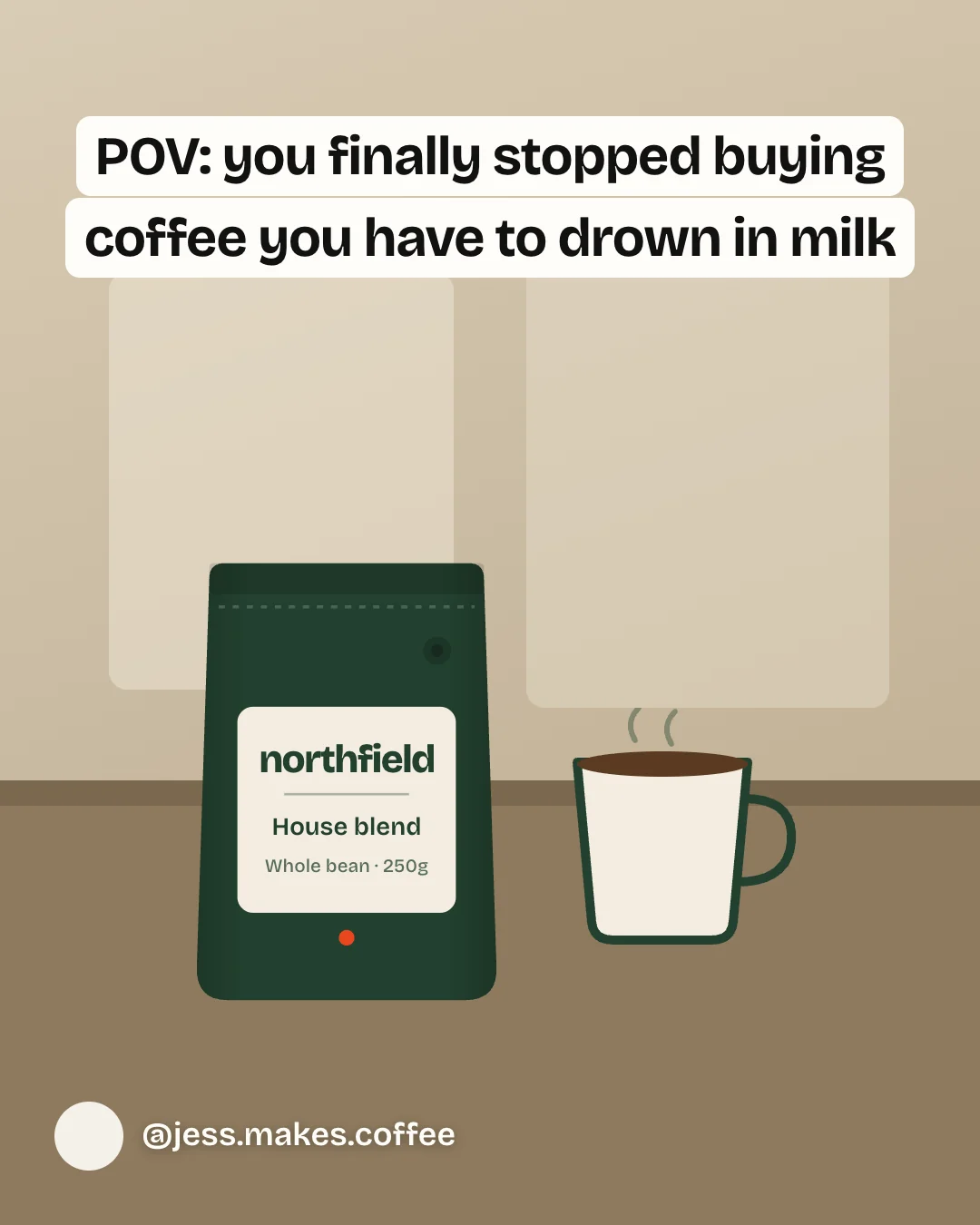
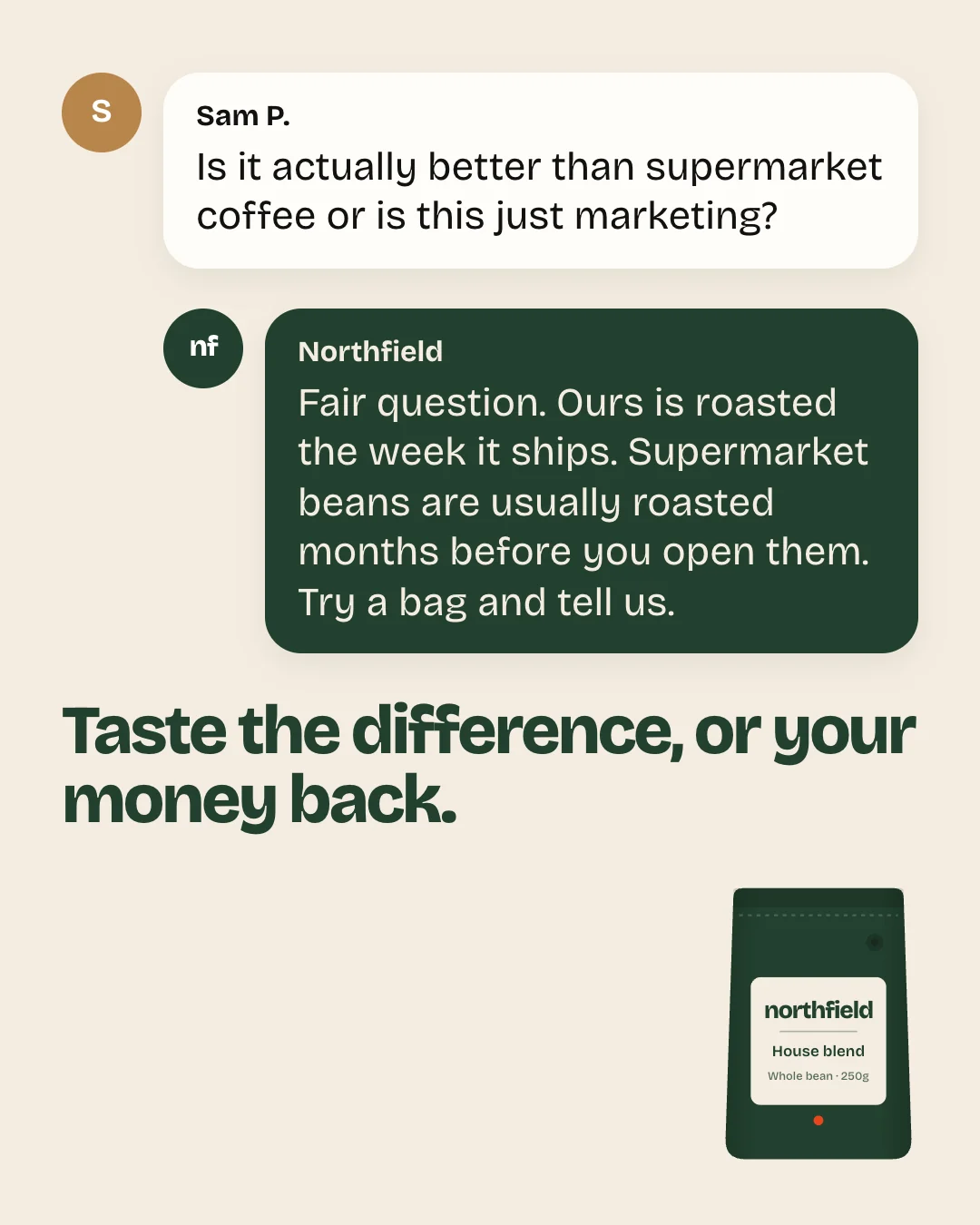
- Reply-to-comment ads. Take a real objection from your comments and make an ad that answers it. The comment does the work of the hook, because the reader was probably thinking the same thing.
- Keep the engagement. When you reuse a winning ad in a new campaign, use the existing post rather than creating a new one, so its likes and comments come with it.
8. Press and awards
Press works when the buyer knows and trusts the publication. A quote from a magazine your customers read is proof. A row of logos they don’t recognise is decoration.
If you use press, use a quote, not just a logo, and make sure it’s about the product you’re advertising.
9. What to stop doing
- Invented urgency. “17 people are looking at this right now” is either false or meaningless, and readers know it.
- Numbers you can’t back up. “#1 coffee in the UK” needs evidence. So does “thousands of five-star reviews”.
- Stock photos posing as customers. People spot them instantly, and they make every other claim look suspect.
- Fake or paid reviews passed off as genuine. They’re banned in the UK and the US, and Meta reviews the landing page as well as the ad.
- “Verified buyer” on anything that isn’t.
What long-running ads use right now
When we went through the active UK ads of 31 well-known DTC brands, a few patterns stood out among the ads still running after four months or more:
- Customer counts sit in the small print. Millions of customers, tens of thousands of reviews, an “Excellent” rating: usually in the line under the headline, not on the image. The image sells. The number backs it up.
- Science gets stacked in the copy. Supplements brands listed who developed the product, how many studies support the ingredients and what a trial found, one line after another.
- Creators carry a lot of it. At one supplements brand, four of the five oldest live ads ran from creators’ handles, each with the creator’s own discount code.
- Objections show up as comments. A pet food brand’s videos are styled as a live stream, with sceptical comments like “the mess though” scrolling past, which the copy then answers. If you borrow the idea, use real comments.
- One review can be enough. The oldest live ad we found, running since June 2023, uses a single customer review as its entire caption.
None of this is clever. It’s specific, believable, and placed where the reader looks for reassurance.
How to test proof properly
Take one ad that already works. Make three or four versions that differ only in the proof: none, a star rating, a review count, a customer quote. Same image, same copy, same audience, same budget.
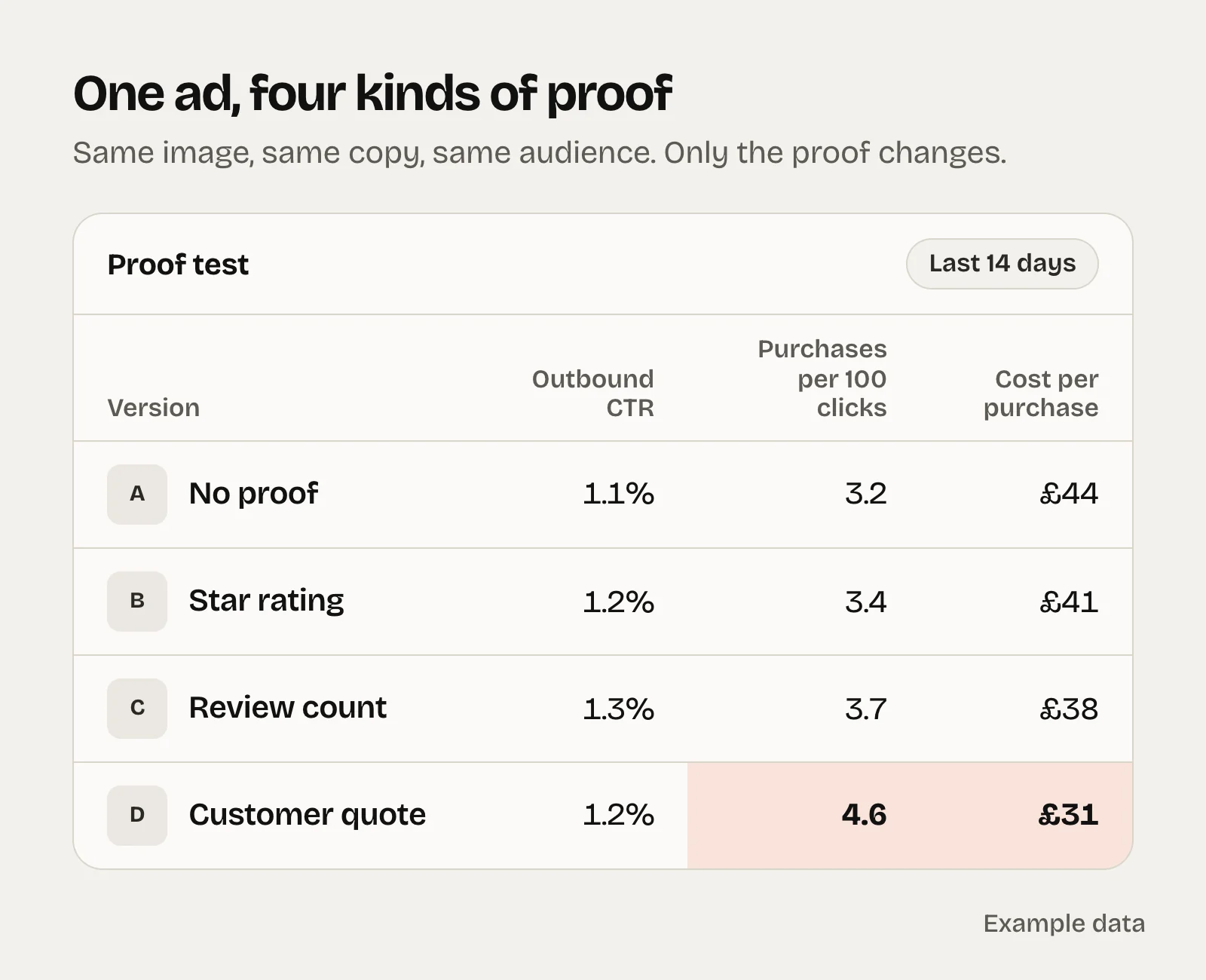
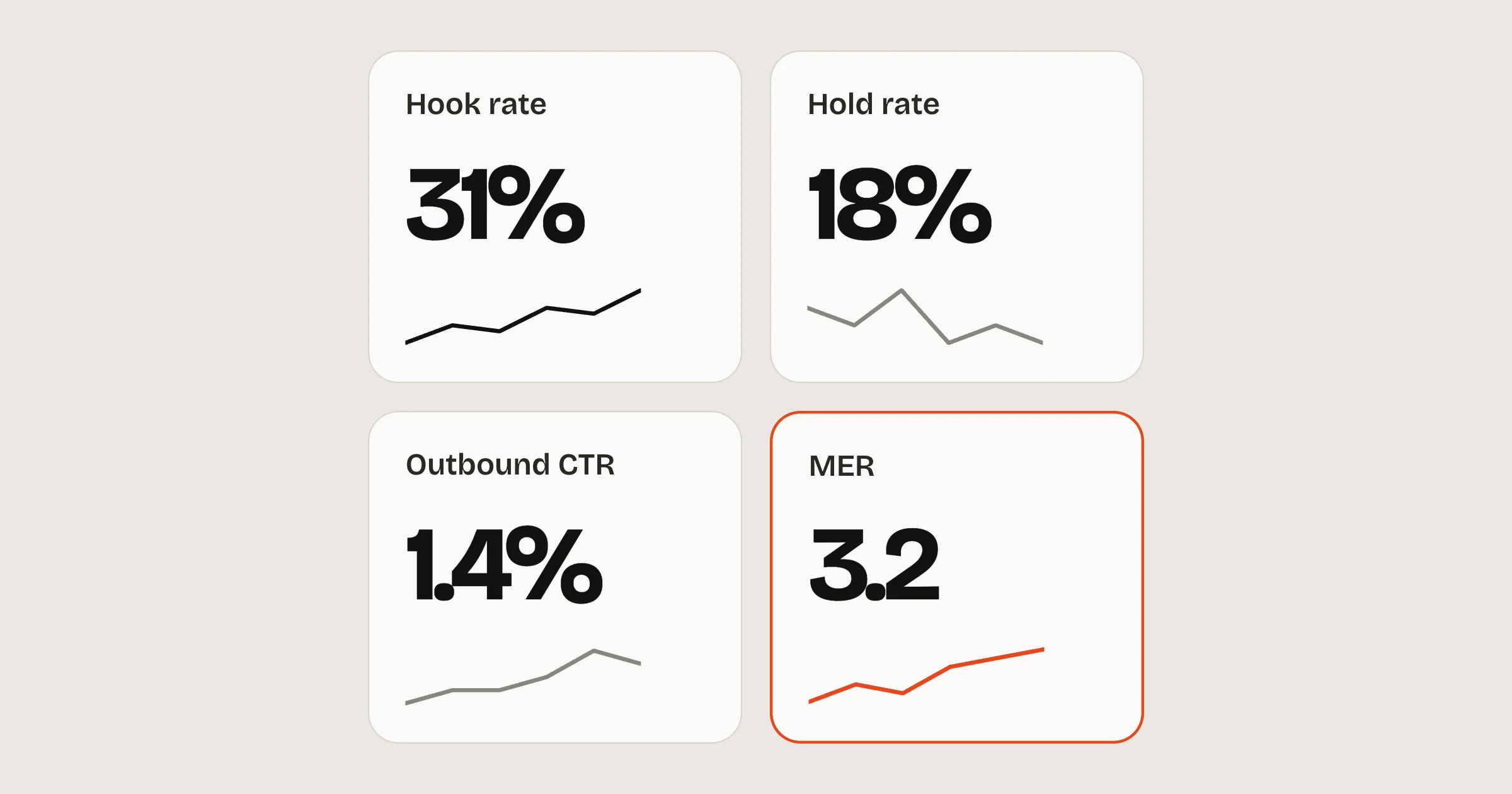
Judge the versions on purchases per 100 clicks and cost per purchase, not CTR. Proof tends to show up in how many clicks turn into orders more than in how many clicks you get, because it removes doubt at the point of decision.
When you find the winner, carry the same proof onto the landing page, ideally right next to the add to basket button. For the numbers that matter in a test like this, see the Meta ads metrics that tell you if an ad is working.